From Copper to Acetal Discover the Versatility of Swiss Turning
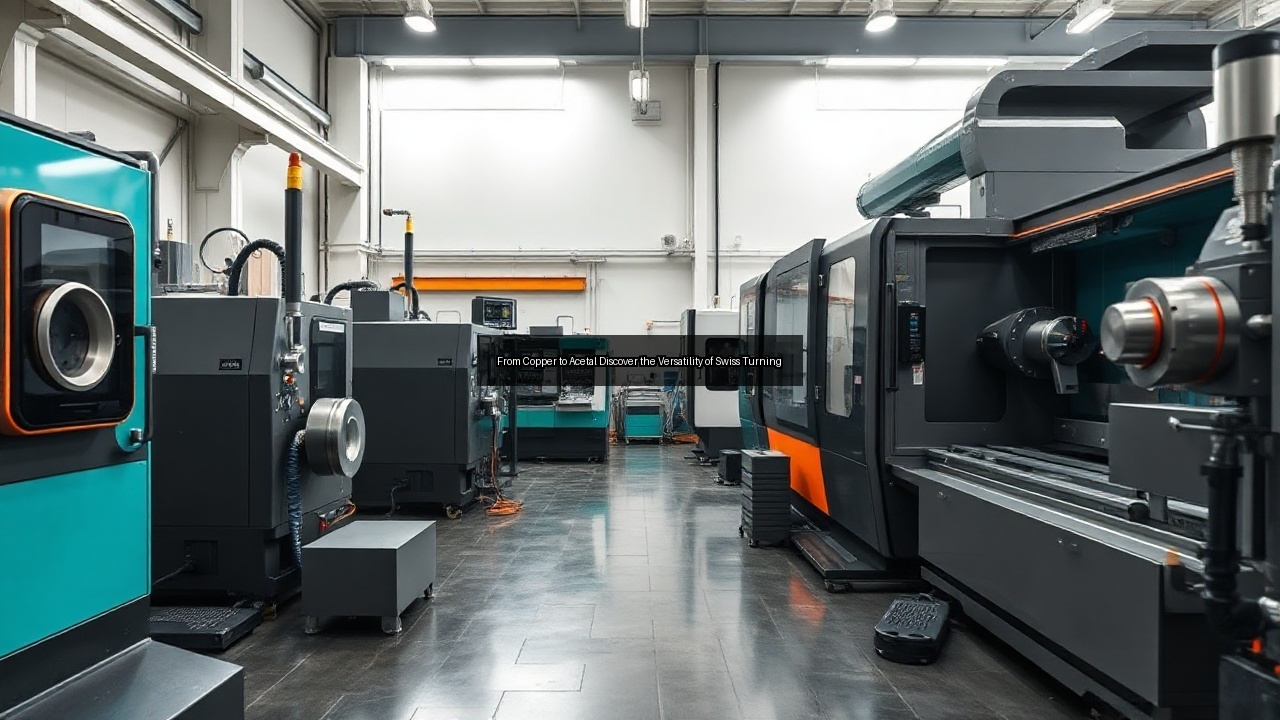
The Evolution of Swiss Turning Services
Brief History of Swiss Machining
Swiss machining, also known as Swiss turning, originated in the late 19th century in Switzerland. The design of the Swiss lathe allowed for the production of small, precise parts, revolutionizing the manufacturing landscape. Early innovations focused on creating intricate components for the watchmaking industry, which demanded exceptional precision and quality. Over the decades, Swiss machining expanded its reach beyond watches to various sectors, including automotive, aerospace, and medical devices. The ability to produce complex geometries with tight tolerances set Swiss turning apart from traditional lathes, establishing its reputation for excellence in precision machining.
Innovations in CNC Turning Technology
Advancements in CNC (Computer Numerical Control) technology have significantly enhanced Swiss turning services. Modern CNC machines offer unparalleled automation and efficiency, allowing manufacturers to produce high-quality parts with minimal human intervention. These innovations include multi-axis capabilities, which enable intricate designs and complex features to be machined in a single setup. Coupled with advanced software, CNC turning services can optimize tool paths, reduce cycle times, and improve overall production efficiency. The integration of real-time monitoring systems further ensures that tolerances are maintained throughout the machining process, solidifying Swiss turning's position as a leader in precision manufacturing.
Comparison with Traditional Lathes
Swiss lathes differ markedly from traditional lathes in their design and functionality. Traditional lathes typically require more manual operation and are limited in their ability to produce small, intricate components. In contrast, Swiss turning machines utilize a sliding headstock mechanism, which allows for continuous material feeding and precise machining of tiny parts. This design enables faster production rates and higher accuracy, making Swiss turning the preferred choice for manufacturers requiring tight tolerances and complex specifications. The shift towards CNC Swiss turning has further enhanced these capabilities, providing a level of versatility and precision that traditional lathes cannot match.
Materials Used in Swiss Turning
Metals: Copper and Steel Advantages
Swiss turning services excel in machining various metals, with copper and steel being two of the most frequently used materials. Copper's excellent conductivity makes it ideal for electrical components, while its malleability allows for intricate designs without compromising strength. Steel, on the other hand, offers superior durability and structural integrity, making it suitable for high-stress applications. Both materials benefit from the precise control offered by CNC turning, enabling manufacturers to achieve tight tolerances and high-quality finishes. The choice between copper and steel often depends on the specific application requirements, balancing factors like conductivity, strength, and cost-effectiveness.
Plastics: The Role of Acetal and PTFE
Plastics have become increasingly popular in Swiss turning, particularly materials like acetal and PTFE (polytetrafluoroethylene). Acetal is favored for its low friction properties, making it ideal for components requiring smooth movement, such as gears and bearings. PTFE stands out for its exceptional chemical resistance and low friction characteristics, often used in applications exposed to harsh environments. CNC machining of these plastics allows for precise tolerances and intricate designs, crucial for industries such as medical devices and aerospace. The versatility of plastic materials in Swiss turning enables manufacturers to meet diverse requirements while ensuring reliability and performance.
Choosing the Right Material for Precision
Selecting the appropriate material for Swiss turning services hinges on several factors, including application requirements, environmental conditions, and the desired properties of the finished product. Engineers must consider aspects such as strength, weight, thermal resistance, and chemical compatibility when making material choices. Copper, steel, acetal, and PTFE each bring unique characteristics that can enhance the performance of machined components. Collaborating with an experienced company that specializes in precision machining services, like Hogge Precision, ensures that the right material is chosen to meet stringent tolerances and quality standards, ultimately leading to successful project outcomes.
Precision and Quality Assurance in Swiss Turning
Understanding Tolerances in CNC Machining
Tolerances in CNC machining play a critical role in ensuring the quality and functionality of finished products. Swiss turning services frequently operate within tight tolerances, often as low as ±0.001 inches, which is essential for components used in high-performance applications. Understanding the significance of these tolerances informs the entire machining process, from design to production. Engineers must specify tolerances that reflect the intended use of each part, guiding the selection of suitable materials and machining methods. Achieving and maintaining these tight tolerances requires precise machinery, skilled operators, and effective quality control measures.
Quality Control Processes at Hogge Precision
Quality assurance is paramount in Swiss turning, with companies like Hogge Precision implementing rigorous quality control processes to uphold high standards. Their approach includes regular calibration of CNC machines, thorough inspections of machined parts, and adherence to established quality benchmarks. Each component undergoes detailed examination, often using advanced metrology tools to verify dimensions and tolerances. This commitment to quality not only ensures compliance with customer specifications but also enhances the reliability and performance of the final products. By prioritizing quality assurance, Hogge Precision reinforces its reputation within the precision machining industry.
ISO Standards and Their Importance
ISO standards serve as essential guidelines that define the quality management systems for manufacturing processes, including Swiss turning services. Compliance with ISO 9001, for instance, signifies that a company maintains quality assurance practices that consistently meet customer expectations. These standards encompass various aspects of manufacturing, from operational efficiency to customer service quality. Companies that adhere to ISO standards can demonstrate their commitment to quality, which builds trust with clients and partners. In the competitive landscape of precision machining, ISO certification becomes a key differentiator, positioning a company as a reliable choice for customers seeking high-quality components.
Applications of Swiss Turning in Modern Manufacturing
CNC Routing and Surface Finishing Techniques
The versatility of Swiss turning extends to CNC routing and advanced surface finishing techniques. CNC routing allows for the efficient cutting and shaping of materials, which complements the precision of Swiss turning in creating complex parts. Surface finishing techniques, such as polishing, anodizing, and plating, enhance the aesthetic and functional properties of machined components. These processes are crucial in industries where appearance and surface quality are vital, such as consumer electronics and automotive. By combining Swiss turning with CNC routing and surface finishing, manufacturers like McCormick Industries can deliver high-quality, ready-to-use parts that meet stringent specifications.
Integration with 3D Printing
The integration of Swiss turning services with 3D printing technology represents a significant advancement in modern manufacturing. This hybrid approach allows for the rapid prototyping of complex geometries, followed by precise finishing through CNC turning. 3D printing provides flexibility in design, enabling manufacturers to test and iterate on components quickly. Once a design is finalized, Swiss turning can produce high-quality, precise parts that adhere to strict tolerances. This synergy between Swiss turning and 3D printing not only accelerates the development process but also enhances cost efficiency, making it an attractive option for industries focused on innovation.
Case Studies: Success Stories from McCormick Industries
McCormick Industries exemplifies the successful application of Swiss turning services across various projects. One notable case involved the production of precision components for the aerospace sector, where stringent tolerances and materials were critical. By leveraging advanced Swiss turning techniques, McCormick Industries delivered components that met both performance and safety standards. Another success story involved collaboration with a medical device company, where the intricate designs required the unique capabilities of Swiss turning. These case studies illustrate how Swiss turning services can drive innovation and quality in manufacturing, asserting their value in today's competitive landscape.